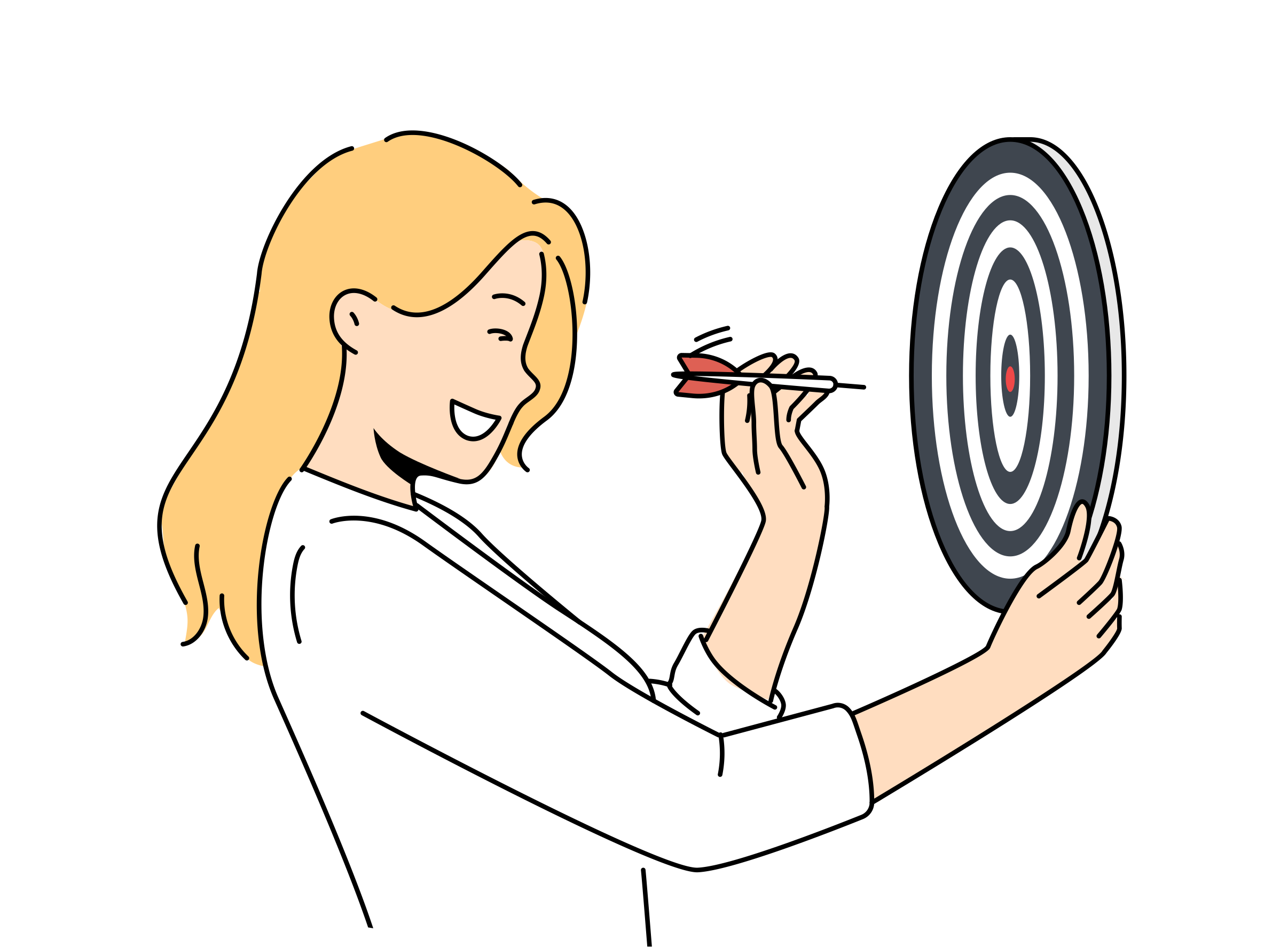
Success is rarely created by a single moment of courage or one perfect opportunity. More often, it develops through the preparation that happens long before the opportunity arrives. People may notice the final result, but they usually do not see the hours spent learning, practicing, planning, correcting mistakes, and developing the skills required to perform when the moment finally comes. Preparation creates a foundation that allows you to move forward even when uncertainty is still present.
This does not mean that preparation removes every fear or guarantees a particular outcome. It means that when you have prepared seriously, you have more knowledge, experience, and clarity to work with when an important decision or opportunity appears. Instead of allowing uncertainty to completely control your response, you can rely on the work you have already done.
Hesitation often becomes strongest when preparation is weakest. When you do not understand the situation, lack the necessary skills, or have not thought through your options, uncertainty can feel overwhelming. Preparation cannot eliminate uncertainty, but it can make uncertainty easier to manage because you have developed a stronger foundation from which to make decisions.
Preparation Creates Confidence Through Evidence
Confidence is often discussed as if it is something that must appear before action. In reality, confidence can develop gradually through preparation and experience. When you repeatedly study a subject, practice a skill, solve problems, and learn from mistakes, you collect evidence that you are becoming more capable.
This kind of confidence is different from simply telling yourself that everything will work out. It comes from knowing that you have invested time in becoming ready. When an opportunity arrives, you may still feel nervous, but your preparation gives you something concrete to rely on. You know what you have practiced, what you understand, and what areas still require attention.
Hesitation Often Comes From Uncertainty
Sometimes it is a natural response to uncertainty, especially when the decision has meaningful consequences. You may hesitate because you do not know what will happen, because several choices appear possible, or because you are concerned about making the wrong decision.
Preparation can reduce some of that uncertainty.
When you research the situation, understand the risks, develop relevant skills, and consider different scenarios, the decision becomes more informed. You may still not know exactly what will happen, but you have a better understanding of what you are dealing with.
Preparation Begins Before the Opportunity Appears
A stronger approach is to prepare before you know exactly when the opportunity will appear.
If you want to lead a business, develop leadership skills before you receive a major leadership responsibility. If you want to build a career in a particular field, develop relevant knowledge before the ideal position becomes available. If you want to create valuable content, learn how to research, communicate, and produce consistently before a major opportunity for growth appears.
Preparation allows you to respond instead of scrambling.
Preparation Turns Waiting Into Progress
There may be periods when the opportunity you want has not arrived yet. That waiting period can feel frustrating, especially when you cannot control the timing.
Instead of treating the waiting period as wasted time, use it to become more capable.
- Study the industry.
- Improve your communication.
- Develop technical skills.
- Practice decision-making.
- Build useful relationships.
- Create small projects.
- Analyze your previous mistakes.
The opportunity may be outside your control, but your preparation is often within your control.
Practice Makes Important Actions More Familiar
When you practice something repeatedly, the process becomes more familiar. This does not mean that practice guarantees flawless performance, but it can reduce the amount of uncertainty involved.
A person who has repeatedly presented ideas may still feel nervous before an important presentation, but they have experience organizing thoughts and communicating under pressure. Someone who has practiced solving problems may still encounter difficult situations, but they have a larger collection of methods to draw upon.
Repeated practice gives you experience that cannot be created at the last minute.
Preparation Helps You Make Better Decisions
Good decisions require information, judgment, and an understanding of consequences. Preparation can improve all three.
When you understand a subject, you can identify important details more easily. When you have considered possible outcomes, you may be less surprised by unexpected developments. When you have practiced analyzing problems, you may be better equipped to distinguish important information from distractions.
Preparation does not make every decision easy. It gives you a stronger basis for making the decision.
Do Not Wait for Perfect Preparation
There is an important difference between preparation and endless preparation.
Preparation should eventually lead to action.
You can spend too long researching, planning, and improving your strategy because you are afraid of making a mistake. At some point, additional preparation may provide less value than actually testing your approach.
The goal is not to know everything before beginning. The goal is to become prepared enough to take a reasonable next step and then continue learning through experience.
Preparation and Execution Must Work Together
Preparation without execution can become another form of hesitation.
You may read dozens of books about entrepreneurship without starting a project. You may study a skill for months without applying it. You may create detailed plans without testing them in reality.
Execution gives your preparation a purpose.
Once you begin, you discover what your preparation missed. You encounter real problems, receive feedback, and develop practical experience. The strongest process combines preparation with action rather than treating them as separate stages.
Learn Before the Pressure Arrives
High-pressure situations can make it difficult to learn from the beginning.
When an important opportunity is already in front of you, you may have limited time to develop basic knowledge. This is why preparation should happen during quieter periods.
- Use ordinary days to build extraordinary readiness.
- Develop skills when nobody is demanding them.
- Study when there is no immediate deadline.
- Practice when there is no audience.
- Build systems before you desperately need them.
This creates a foundation that can support you when circumstances become more demanding.
Preparation Helps You Recognize Opportunities
Opportunities are not always obvious.
Two people can encounter the same situation and interpret it differently because their knowledge and experience are different. Someone who has prepared deeply in a particular area may recognize a possibility that another person overlooks.
Preparation therefore does more than make you ready to act. It can improve your ability to notice what is worth acting on.
- Knowledge gives you context.
- Experience gives you pattern recognition.
- Practice gives you capability.
- Together, these can make opportunities easier to understand.
Build Skills Before You Need Them
One of the most valuable forms of preparation is developing skills before circumstances require them.
Communication, leadership, research, writing, negotiation, analysis, technology, financial understanding, and problem-solving can become useful across many situations.
You may not know exactly where every skill will take you, but developing useful capabilities increases the range of situations you can handle.
Your skills become part of the preparation you carry with you.
Preparation Reduces Avoidable Mistakes
Mistakes are an important part of learning, but not every mistake needs to be repeated.
Research can prevent you from overlooking basic information. Planning can help identify obvious risks. Practice can reveal weaknesses before they matter in an important situation. Reviewing previous failures can help prevent the same problems from occurring again.
Preparation cannot eliminate mistakes, but it can reduce some avoidable ones and make you more capable of responding when unexpected problems appear.
Use Failure as Preparation for the Next Attempt
A previous failure does not have to become evidence that you should stop.
It can become part of your preparation.
Analyze what happened. Understand which assumptions were incorrect. Identify where execution was weak. Determine what you would change if you attempted the same objective again.
The experience becomes valuable when it changes your future behavior.
You are not starting from the same position because you now know something you did not know before.
Do Not Let Fear Make Every Decision
Hesitation becomes a problem when fear consistently determines what you do.
Fear may tell you that you are not ready, that failure will be embarrassing, or that the opportunity is too uncertain. Some of those concerns may deserve consideration, but they should be examined rather than automatically obeyed.
Ask yourself whether additional preparation would genuinely improve your position or whether you are simply delaying because action feels uncomfortable.
That distinction can help you move forward responsibly.
Preparation Gives You a Starting Point
You do not need complete certainty before taking action.
- You need a reasonable foundation.
- Know your objective.
- Understand the basic requirements.
- Identify the major risks.
- Develop the necessary skills.
- Create a practical first step.
- Then begin.
As you move forward, you can gather additional information and make adjustments. Preparation gives you a starting point; experience helps you improve the route.
Build Preparation Into Your Routine
Preparation becomes more powerful when it is consistent rather than occasional.
Instead of waiting until you have an important deadline, make learning and practice part of your normal routine.
Spend regular time developing your skills. Review your goals periodically. Study changes in your field. Reflect on recent decisions. Improve your systems.
Small amounts of preparation accumulated over a long period can create a significant difference in readiness.
Preparation Creates Options
When you have developed multiple useful skills, you may have more options available when circumstances change.
If one strategy stops working, another may be possible.
If an industry changes, your transferable skills can help you adapt.
If an opportunity disappears, your experience may help you recognize another.
Preparation does not guarantee that circumstances will cooperate, but it can increase your ability to respond when they do not.
Learn to Make Decisions With Imperfect Information
There will never be a moment when you know everything.
Important decisions often have uncertainty attached to them.
Preparation should therefore not be about eliminating uncertainty completely. It should help you become comfortable making reasonable decisions despite uncertainty.
- Gather the information that matters.
- Understand the major risks.
- Consider alternatives.
- Decide what is acceptable.
- Then act and monitor the results.
This creates a practical balance between preparation and execution.
Avoid Overthinking the First Step
Sometimes hesitation becomes complicated because the first step is treated as if it determines the entire future.
- It usually does not.
- The first step can provide information.
- The next step can be adjusted.
- The strategy can evolve.
- You can learn from the response.
This does not mean acting recklessly. It means recognizing that many journeys become clearer after you begin moving.
Strong Preparation Supports Faster Execution
When you have already done the necessary groundwork, you can often move more quickly when circumstances demand it.
- You do not have to start researching from zero.
- You do not have to learn every basic skill immediately.
- You do not have to build a process from scratch.
- Your previous preparation becomes an asset.
This is one reason people who appear to act quickly may actually have spent years preparing before anyone noticed.
Preparation Is an Investment in Future Choices
The knowledge and skills you develop today can influence the choices available to you later.
Learning may qualify you for new opportunities.
Practice may make difficult responsibilities manageable.
Experience may improve your judgment.
Relationships may introduce you to possibilities you would not otherwise encounter.
Preparation expands your capacity, and greater capacity can create more choices.
Your Standards Should Include Preparation
If you want high-quality results, preparation should be part of the standard you expect from yourself.
- Do not wait for a crisis to begin becoming organized.
- Do not wait for an important opportunity to begin developing confidence.
- Do not wait for a major responsibility to begin learning how to handle it.
Treat preparation as part of the work itself.
The final performance may receive attention, but the preparation often determines how effectively you can perform.
Preparation Makes Progress More Intentional
Without preparation, you may spend significant effort reacting to whatever happens next.
With preparation, you can approach challenges more deliberately.
- You know what you are trying to accomplish.
- You understand some of the likely obstacles.
- You have considered possible responses.
- You have developed relevant capabilities.
This allows your actions to become more intentional rather than purely reactive.
Do Not Let Preparation Become Perfectionism
Preparation becomes counterproductive when you use it to avoid every possibility of failure.
There will always be another book to read, another course to complete, another expert to consult, or another detail to improve.
Eventually, you must decide that you are sufficiently prepared to begin.
The goal is not perfect readiness.
The goal is useful readiness.
Once you reach that point, action becomes part of the preparation process because real experience will reveal what you still need to learn.
Confidence Can Grow After You Begin
Sometimes you will not feel confident before taking action.
That is normal.
You may only become confident after successfully handling several smaller challenges.
This is why preparation and gradual execution work well together. You prepare, take a manageable step, learn from the experience, and prepare for the next level.
Over time, the process creates evidence of capability.
That evidence can make future decisions less intimidating.
Success Requires Both Courage and Preparation
Courage without preparation can lead to unnecessary mistakes.
Preparation without courage can lead to missed opportunities.
The combination is more useful.
Prepare seriously so that you understand what you are doing, then develop the willingness to act when action becomes appropriate.
You do not need to eliminate uncertainty before moving forward. You need enough preparation to make the next decision responsibly.
Turn Hesitation Into a Question
When you notice yourself hesitating, instead of simply accepting the hesitation, ask what is causing it.
- Do you need more information?
- Do you lack a particular skill?
- Are you afraid of failure?
- Is the risk genuinely too high?
- Is the goal unclear?
- Are you waiting for permission that nobody needs to give?
Each answer suggests a different response.
If information is missing, research.
If a skill is missing, practice.
If the goal is unclear, define it.
If the risk is too high, reconsider the plan.
If fear is the main barrier, take a smaller step that allows you to gain experience.
Turning hesitation into a specific question can make it easier to respond constructively.
Prepare Today for Opportunities You Cannot See Yet
You cannot know every opportunity that will appear in your future.
That is exactly why broad preparation matters.
Develop capabilities that remain useful across different circumstances. Learn how to communicate, solve problems, analyze information, adapt to change, and work consistently.
You may not know exactly where these abilities will lead, but they can increase your readiness for opportunities that you cannot currently predict.
Success Grows Through Prepared Action
Success is not simply about being prepared or being willing to act. It develops through the combination of preparation, execution, learning, and adaptation.
Prepare enough to understand the situation.
Act when the next step becomes reasonable.
- Observe what happens.
- Learn from the outcome.
- Improve your approach.
- Then prepare for the next level.
This cycle can continue throughout your career and personal development.
When Preparation Becomes Stronger Than Hesitation
There will always be moments when you feel uncertain before taking an important step. That uncertainty does not mean you should automatically stop. Sometimes it means you need more information or better preparation. Other times it simply means that the decision matters to you.
The goal is not to become someone who never hesitates. The goal is to become someone who knows how to respond to hesitation intelligently.
When preparation is strong, you have something to rely on when uncertainty appears. Your knowledge gives you context, your practice gives you experience, and your previous efforts give you evidence that you can continue learning.
You may still feel nervous, but nervousness no longer has to make the decision for you.
Keep Preparing, Then Keep Moving
Your future will contain opportunities you cannot predict and challenges you cannot completely prepare for. No amount of preparation can guarantee that everything will go according to plan. However, preparation can increase your ability to respond when circumstances change.
Use ordinary days to develop extraordinary readiness. Build your knowledge before you need it. Practice your skills before the pressure arrives. Study your mistakes before they become repeated patterns. Create systems before you desperately need them. Develop your judgment before major decisions depend on it.
Then, when the opportunity appears, do not allow endless hesitation to prevent you from using everything you have built.
Success grows when preparation becomes stronger than hesitation because preparation gives you a foundation from which to act. You do not need perfect certainty, complete confidence, or a guarantee of success before moving forward. You need enough preparation to understand your next step, enough courage to take it, and enough discipline to keep learning as you continue.